Compare
Prime Visa vs Apple Card
One card is built around a store, the other around a phone. Neither is a general-purpose winner, and both admit it in their own terms.
The short answer
Prime Visa or Apple Card at Amazon?
The Prime Visa, on Amazon spending. Apple publishes 2% Daily Cash back on every purchase you make using Apple Card with Apple Pay and unlimited 3% Daily Cash back on everything you buy at Apple; Amazon is not on Apple’s published 3% partner list. Against 5% with an eligible Prime membership, that is a clear gap. The Apple Card wins on everything the Prime Visa treats as 1%.
#ad Sign-up offers are for new cardmembers only and approval is Chase's decision. We have no affiliate relationship with Apple. We earn a flat fee if you sign up through this link, at no cost to you. How we’re paid.
Side by side
Two cards built around different things
| Prime Visa | Apple Card | |
|---|---|---|
| At Amazon | 5% back, with eligible Prime | 2% with Apple Pay, 1% with the card |
| At Apple | 1% back | unlimited 3% Daily Cash back on everything you buy at Apple |
| Select partners | Not a feature of this card | 3% Daily Cash back when you use Apple Card with Apple Pay at select partners including Nike, Uber, Exxon Mobil, Ace Hardware, ChargePoint, Hertz and Booking.com |
| Everything else | 1% back (2% on gas, restaurants and transit) | 2% with Apple Pay, 1% with the card |
| Annual fee | $0 | no fees |
| Foreign transaction fees | None | no fees |
| How rewards arrive | Points worth 100 points = $1 (each $1 in % back rewards earned is equal to 100 points) | Daily Cash, paid daily |
| The condition on the top rate | An eligible Prime membership | Paying with Apple Pay |
Sources: Chase — Prime Visa · Apple — Apple Card · verified 2026-08-11
The structural observation is that both cards have a condition attached to their best rate, and the conditions are of completely different kinds. The Prime Visa’s is financial — pay for a membership. The Apple Card’s is behavioral — pay with your phone.
The catch
The Apple Card pays 1% if you use the card
This is the detail that gets skipped, and it halves the card’s headline rate. Apple publishes 2% Daily Cash back on every purchase you make using Apple Card with Apple Pay (Apple — Apple Card, verified 2026-08-12), and separately 1% Daily Cash back on every purchase when you use the titanium card (Apple — Apple Card, verified 2026-08-12).
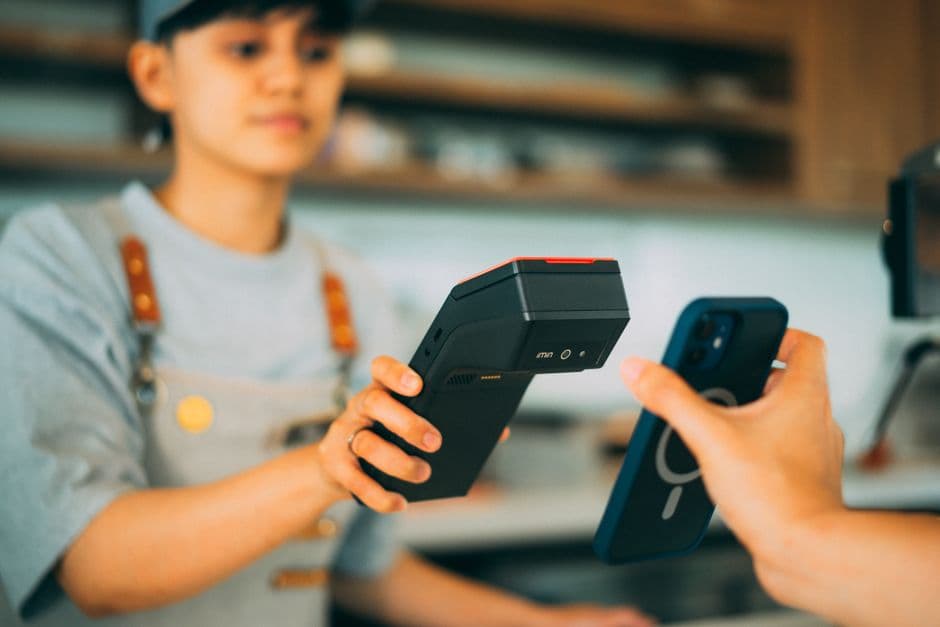
So the “2% card” is a 2% card only when you tap your phone or watch. Hand over the physical titanium card — at a restaurant that takes your card away, at a merchant with no contactless terminal, over the phone — and you earn 1%.
Apple states that Apple Pay is accepted at 85 percent of merchants in the United States (Apple — Apple Card, verified 2026-08-12). That is high acceptance and it is not universal, and the 15% where it does not work is disproportionately the places where handing over a card is the norm.
For an Amazon comparison this matters less, because online checkout is where Apple Pay works best. Amazon spending on an Apple Card should reliably earn the 2%. It is everywhere else that the effective rate drifts between 1% and 2% depending on how you pay.
Source: Apple — Apple Card · verified 2026-08-12
The math
What each returns on the same spending
Assume Apple Pay throughout, so the Apple Card earns its better 2% rate, and assume an eligible Prime membership so the Prime Visa earns its 5%. Both cards are fee-free.
| Spending split | Prime Visa | Apple Card (Apple Pay) | Better card |
|---|---|---|---|
| $2,000 Amazon / $18,000 other | $100 + $180 = $280 | $400 | Apple Card |
| $6,000 Amazon / $14,000 other | $300 + $140 = $440 | $400 | Prime Visa |
| $10,000 Amazon / $10,000 other | $500 + $100 = $600 | $400 | Prime Visa |
Sources: Chase — Prime Visa · Apple — Apple Card · verified 2026-08-11
The crossover on a $20,000 total sits somewhere near $5,000 of annual Amazon spending. The Prime Visa earns 1% back (Chase — Prime Visa, verified 2026-08-11) on general purchases against the Apple Card’s 2%, and that one-point gap on the large pile of general spending takes a lot of Amazon spending to overcome.
The first row makes the point bluntly: someone with modest Amazon spending earns more on the flat card. That is the same conclusion as the Freedom Unlimited comparison, and it comes up on every specialist-versus-generalist page for the same reason.
One difference worth crediting to the Apple Card: it has no redemption discount. Daily Cash is cash. The Freedom Unlimited, by contrast, publishes a reduced point value at Amazon checkout — a trap the Apple Card simply does not have.
Where Apple wins outright
Two categories that are not close
Buying from Apple. unlimited 3% Daily Cash back on everything you buy at Apple (Apple — Apple Card, verified 2026-08-12). A Mac, an iPhone, an iPad, App Store purchases, Apple subscriptions — all at 3%, where the Prime Visa would earn its base 1%. On a $2,000 laptop that is $60 against $20.
The published partner list. 3% Daily Cash back when you use Apple Card with Apple Pay at select partners including Nike, Uber, Exxon Mobil, Ace Hardware, ChargePoint, Hertz and Booking.com (Apple — Apple Card, verified 2026-08-12). If your spending includes those merchants regularly, that is 3% on categories the Prime Visa treats as 1% or 2%. Note that Apple attaches specific conditions to several of those partners — rate types on travel bookings, particular payment methods — so the 3% is not unconditional.
And a genuine structural advantage: Daily Cash is paid daily as cash. No points, no redemption decision, no minimum, no route-dependent value. That is a simpler product than any points program on this site, including this one — even though Amazon points are also fixed at 100 points = $1 (each $1 in % back rewards earned is equal to 100 points) (Chase — Prime Visa, verified 2026-08-11).
Sources: Apple — Apple Card · Chase — Prime Visa · verified 2026-08-12
The verdict
Who each card is for
Heavy Amazon spender with Prime. Prime Visa. 5% is not reachable by a 2% card, and the Amazon rate is uncapped.
Modest Amazon spender, most spending elsewhere. Apple Card, if you reliably pay with Apple Pay. 2% on the bulk of spending beats 1% on the bulk of spending.
You buy a lot from Apple. Apple Card for those purchases at minimum. 3% versus 1% on large-ticket hardware is real money.
You do not use Apple Pay, or do not have an iPhone. The Apple Card is largely pointless — you would be holding a 1% card. This is the cleanest disqualifier on the page.
You want both. Reasonable, and both are fee-free. Amazon and Whole Foods on the Prime Visa, everything else on the Apple Card with Apple Pay. Just do not open them in the same week — stacked applications are the avoidable part.
#ad New cardmembers only. Chase decides approval and the 5% requires an eligible Prime membership. We have no relationship with Apple and earn nothing if you choose the Apple Card. We earn a flat fee if you sign up through this link, at no cost to you. How we’re paid.
Common questions
Common questions
- Prime Visa or Apple Card for Amazon purchases?
- The Prime Visa. It pays 5% at Amazon with an eligible Prime membership, where the Apple Card's best general rate is 2% Daily Cash when used with Apple Pay. Amazon is not one of the Apple Card's 3% partners.
- What is Apple Card's cash back rate?
- Apple publishes 3% Daily Cash at Apple and at select partners with Apple Pay, 2% Daily Cash on purchases made with Apple Pay generally, and 1% when using the titanium card.
- Does the Apple Card have fees?
- Apple states the card has no fees. The Prime Visa has a $0 annual fee and no foreign transaction fees, so on fees the two are close to equivalent for ordinary use.
- Why does the Apple Card pay less when you use the physical card?
- Because the 2% rate is tied to Apple Pay. Apple publishes 1% Daily Cash for purchases made with the titanium card, so paying by tapping the phone rather than the card is worth a full percentage point.
- Can you use the Apple Card on Amazon?
- It is a payment card and can be added as a payment method, but it earns the general rate rather than a partner rate. The 3% partner list Apple publishes does not include Amazon.
Related
Read next
- Which card pays the most at Amazon? — the full ranked table, with these two in it
- What are Amazon points worth? — a fixed cent per point, which is the closest thing to Daily Cash on the Amazon side
- Prime Visa vs Chase Freedom Unlimited — the other flat-rate comparison, with a redemption trap the Apple Card does not have
- Prime Visa benefits, one at a time — the protections the Prime Visa carries, sourced and dated
Written by Stephen V. — An enthusiast who's genuinely into this. I read the terms, compile the published rates, and do the math. No lab coat, no credentials, no test lab.
About this site · How we research · How we’re paid
Last verified: 2026-08-12